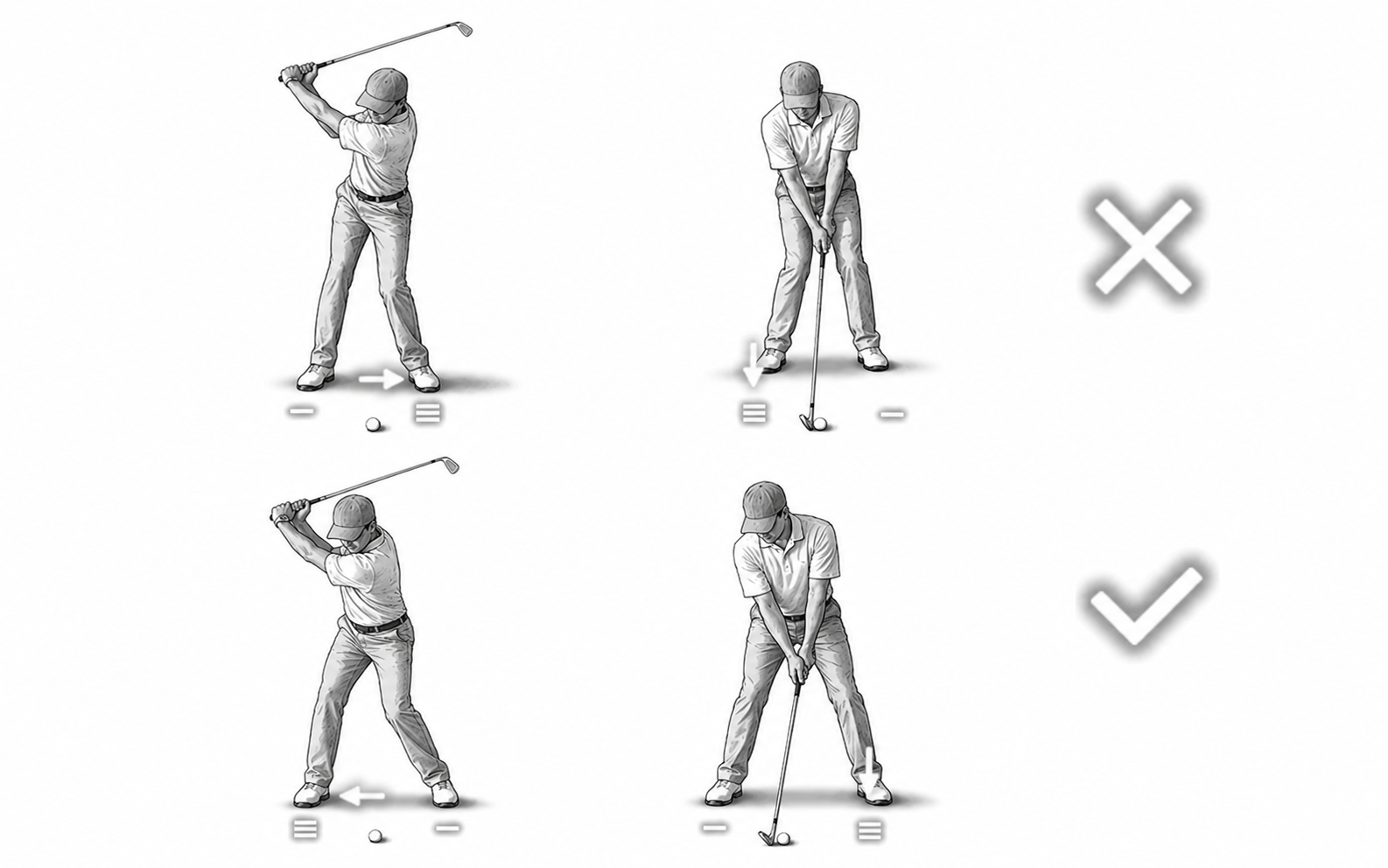
If your weight shifts toward the target in the backswing and away from it in the downswing, you’re dealing with a reverse pivot. This guide explains why it happens, how it destroys consistency, and the simple steps to fix it fast.
The good news? A reverse pivot isn’t random — it comes from a predictable set of movement faults. Once you fix the underlying cause, your balance, rotation, and ball striking improve immediately.
What Causes a Reverse Pivot in the Golf Swing?
A reverse pivot happens when your upper body tilts toward the target in the backswing and away from the target in the downswing. This reverses the natural weight shift and makes it almost impossible to deliver the club consistently.
Most reverse pivots come from one or more of these faults:
- Lack of hip turn causing the upper body to tip instead of rotate
- Overactive upper body starting the backswing with the shoulders instead of the hips
- Hanging back on the downswing to compensate for poor backswing balance
- Early extension forcing the body to stand up and tilt away from the target
- Open clubface causing players to lean back to help square the face
Many golfers with a reverse pivot also struggle with early extension or loss of power, since both issues come from poor sequencing and balance.
Want to know what's causing your reverse pivot?
Upload your swing and the analyzer will show whether you're hanging back, early extending, losing rotation, or tipping your upper body — and which one is creating the reverse pivot.
The Most Common Causes of a Reverse Pivot
1. Lack of Hip Turn
When the hips don’t rotate, the upper body has nowhere to go — so it tilts toward the target. This creates the classic reverse pivot shape at the top of the backswing.
2. Overactive Upper Body
Starting the swing with the shoulders instead of the hips pulls your weight forward immediately. This leads to a steep, inconsistent downswing.
3. Hanging Back
Golfers who reverse pivot often stay on the trail foot in the downswing to “recover” balance. This causes thin shots, fat shots, and weak contact.
If this sounds familiar, here’s how to fix loss of power caused by hanging back.
4. Early Extension
When the hips move toward the ball, the upper body tilts backward to compensate. This creates a reverse pivot shape through impact.
Learn how to fix early extension to restore proper rotation.
5. Open Clubface Compensations
An open face makes golfers lean back and “scoop” to square the club. This tilt away from the target is a classic reverse pivot pattern.
If your reverse pivot also comes with a right miss, here’s how to fix a slice.
How to Identify YOUR Reverse Pivot Cause
Not all reverse pivots come from the same issue. The fix depends on the underlying movement pattern:
- Thin or weak shots → often hanging back
- High, weak fades → often open face or OTT
- Inconsistent contact → often early extension
- Steep downswing → often overactive upper body
The fastest way to know for sure is to look at your swing from face‑on and down‑the‑line angles.
Want to know exactly why you're reverse pivoting?
Upload your swing and get a breakdown of your hip turn, sequencing, rotation, and impact positions — so you know the real cause of your reverse pivot.
Where to Go Next
If you already have a good idea of what’s causing your reverse pivot, here are the best next steps:
- Fix casting and early release
- Fix an over-the-top swing
- Fix early extension
- Fix a slice
- Learn the fundamentals of a consistent golf swing
- Fix loss of power
- Fix a chicken wing
Final Thoughts
A reverse pivot isn’t a swing flaw by itself — it’s a compensation for poor balance or sequencing. Fix the underlying issue, and your rotation, contact, and power improve immediately.
Still Struggling With a Reverse Pivot?
Get a free swing analysis and find out exactly which fault is causing it — and how to fix it fast.
Get My Free Swing Analysis