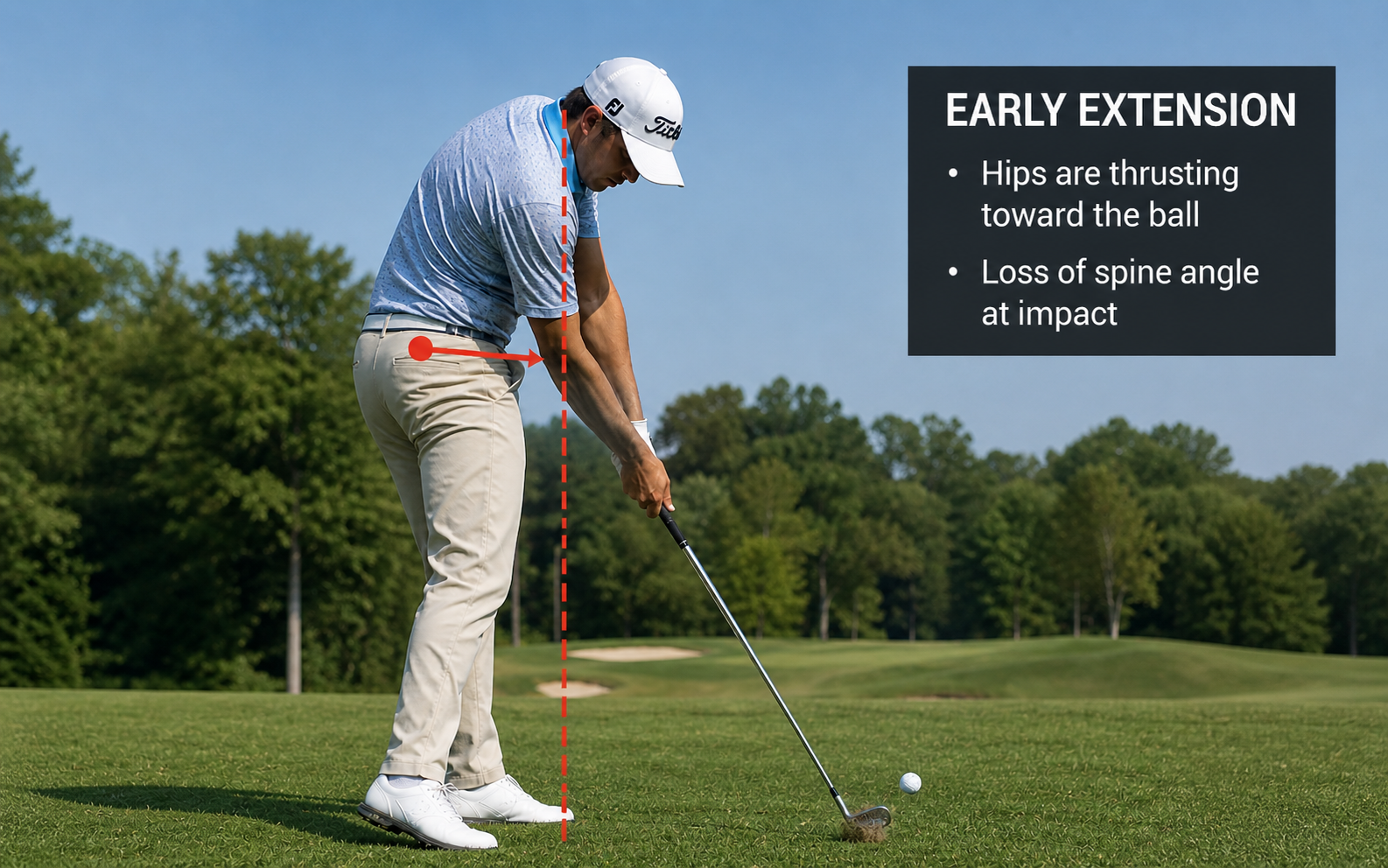
Early extension is one of the most common swing faults in golf, and it affects players of every skill level. If your hips move toward the ball during the downswing, your body loses space, your arms get stuck, and solid contact becomes almost impossible. The good news is that early extension is fixable with the right understanding and drills.
What Is Early Extension?
Early extension happens when your hips thrust toward the golf ball during the downswing instead of rotating around your spine. This causes your upper body to stand up, your arms to lose room, and your swing path to change dramatically.
Common signs you have early extension:
- Standing up out of your posture during the downswing
- Feeling “jammed” at impact
- Inconsistent contact (thin, fat, heel strikes)
- Blocks and hooks caused by a stuck trail arm
- Loss of rotation and power
What Causes Early Extension?
Most golfers early extend because their body is trying to create space for the arms. The root causes usually include:
- Lack of hip rotation — the body moves forward instead of turning
- Poor trail hip mobility
- Standing too close to the ball
- Arms getting behind the body
- Weak core or glutes
Want to know if YOU have this swing fault?
Upload your swing and the analyzer will show you instantly.
How to Fix Early Extension
1. Create Space at Setup
Many golfers stand too close to the ball, forcing the hips to thrust forward during the swing. Give yourself room:
- Arms should hang naturally
- Weight balanced in the mid‑foot
- Hips slightly back, not tucked under
2. Rotate the Hips Instead of Thrusting
The key to eliminating early extension is learning to rotate around your spine instead of moving toward the ball. Feel your lead hip move back and around during the downswing.
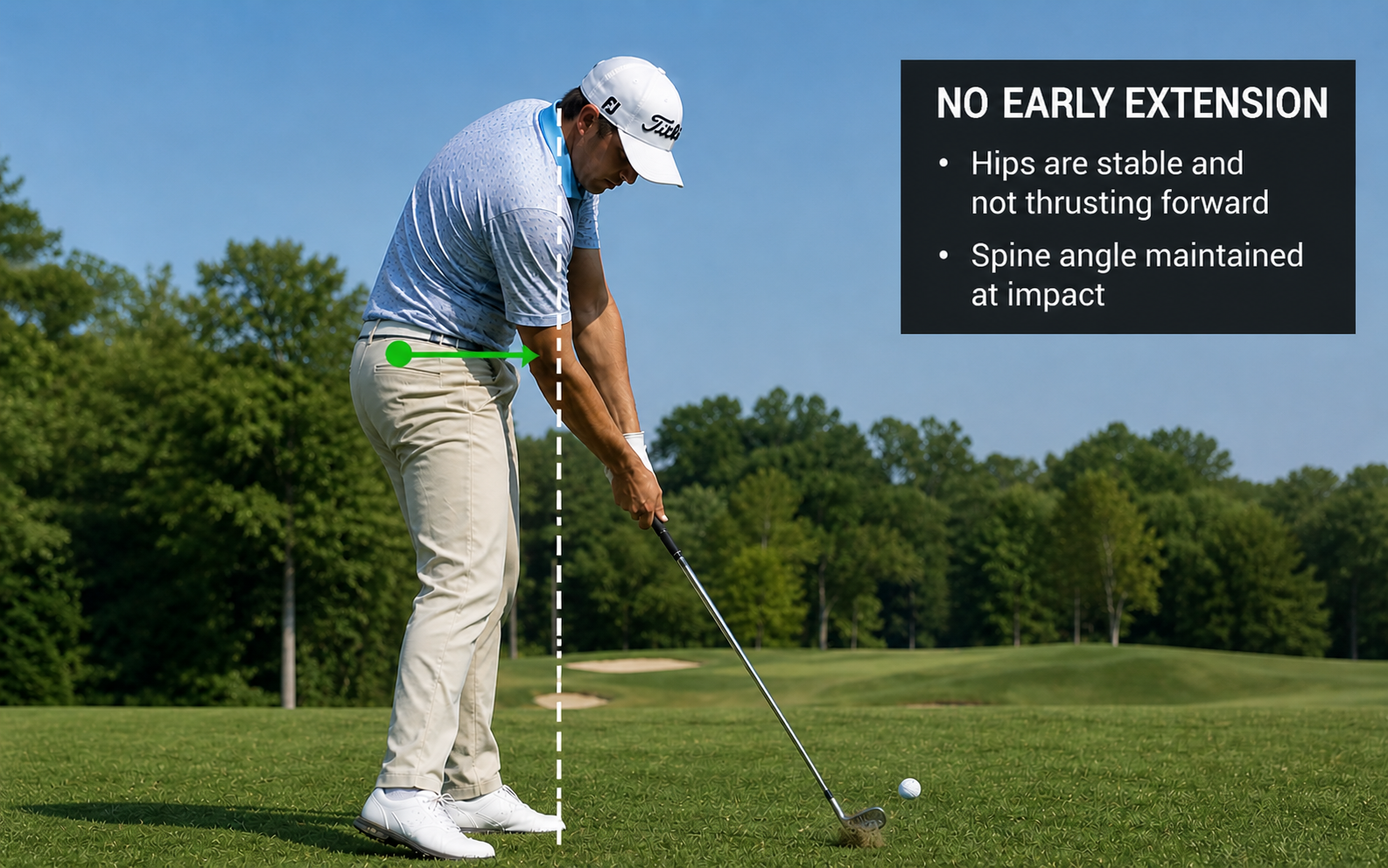
This visual shows the correct movement pattern: the hips rotate back instead of thrusting toward the ball, creating space for the arms and maintaining posture.
3. Keep Your Chest Over the Ball
Maintaining posture is critical. Feel your chest stay down and rotate through impact instead of lifting early.
4. Improve Trail Hip Mobility
If your trail hip can’t internally rotate, your body will compensate by thrusting forward. Simple mobility work can make a huge difference.
Best Drills to Fix Early Extension
1. Chair Drill
Place a chair or alignment stick behind your hips at setup. As you swing, keep your glutes lightly touching the object. This trains proper rotation and posture.
2. Wall Hip Rotation Drill
Stand with your lead hip near a wall and practice rotating your hips without bumping into it. This teaches the feeling of rotating “around” instead of “forward.”
3. Pump Drill
Take the club to the top, pump the downswing halfway three times while keeping your posture, then swing through. This builds the correct movement pattern.
Why Early Extension Hurts Your Swing
Early extension forces your arms to reroute, causing:
- Inconsistent low point
- Loss of power
- Hooks and blocks
- Shanks and heel strikes
Fixing it leads to better rotation, more space, and more consistent ball striking.
Analyze Your Swing for Early Extension
If you’re not sure whether you early extend—or what’s causing it—upload your swing for instant analysis. You’ll get clear feedback on your hip movement, posture, and rotation so you know exactly what to fix.