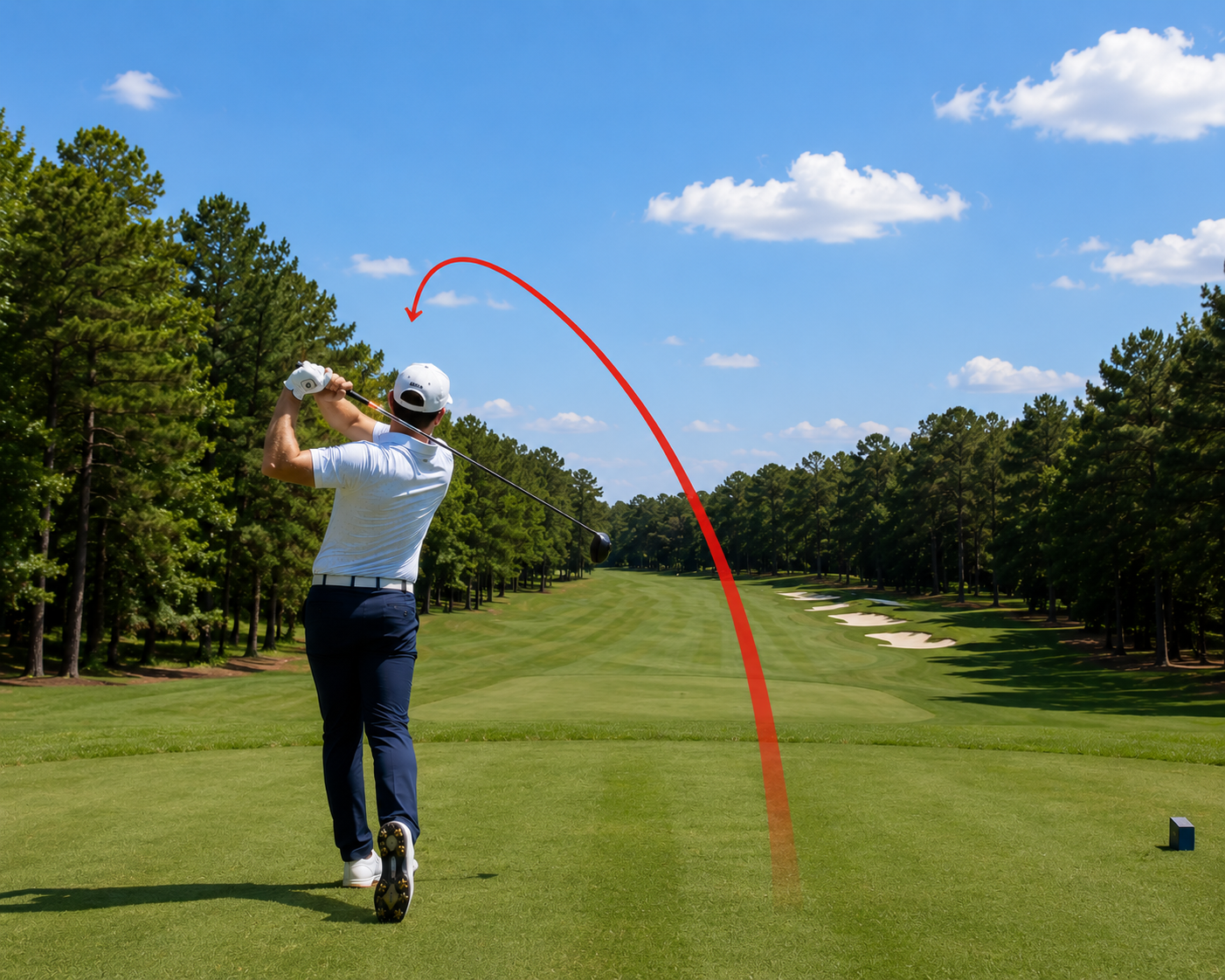
A hook is one of the most frustrating ball flights in golf. The ball starts right and snaps hard left, often diving low and uncontrollably. The good news is that a hook has clear, predictable causes — and once you fix those, your ball flight straightens out quickly.
What Causes a Hook in Golf
A hook happens when the clubface is significantly closed relative to the swing path at impact. In simple terms, your clubface is pointing left of where the club is traveling. This creates strong right-to-left spin.
The most common causes include:
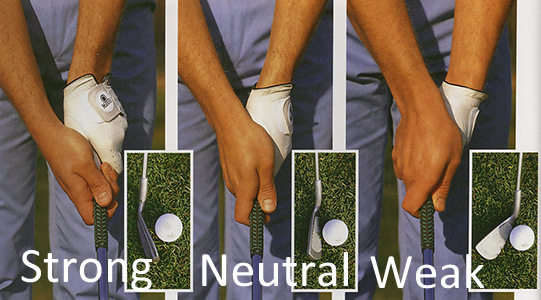
- Strong grip that closes the face too much
- Closed stance that sends the club too far inside
- Excessive inside-out swing path
- Flipping the hands through impact
- Hips stalling which forces the hands to over‑rotate
If you struggle with both ends of the curve, here’s how to fix a slice so you can control your ball flight in both directions.
Want to see how to fix your hook?
Upload your swing and the analyzer will give you clear results on how to improve your ball flight.
How to Fix a Hook Fast
These are the simplest, most reliable fixes that work for beginners and mid‑handicaps.
1. Neutralize Your Grip
A grip that is too strong is the number one cause of a hook. Rotate both hands slightly toward the target until you see two knuckles on your lead hand instead of three or four.
2. Square Your Stance
Many golfers who hook the ball aim right without realizing it. This encourages an exaggerated inside-out path. Set your feet, hips, and shoulders parallel to your target line.
3. Reduce the Inside-Out Path
You do not need a big inside-out path to hit a draw. A small amount is enough. Focus on feeling the club travel more down the line instead of excessively from the inside.
4. Keep the Clubface Square Longer
If your hands flip or roll over too early, the face shuts down. Feel the back of your lead hand pointing at the target for a split second after impact.
5. Rotate Your Hips Through Impact
When the hips stall, the hands take over and close the face. Feel your belt buckle turning toward the target as the club approaches the ball.
Hips stalling is often related to early extension, which changes your posture and forces the hands to flip.
Drills to Fix a Hook
Gate Path Drill
Place two tees just wider than your clubhead. Swing through the gate without hitting the outside tee. This prevents an overly inside-out path.
Lead Hand Only Drill
Hit small half shots with only your lead hand. This teaches proper face control and prevents flipping.
Alignment Stick Down-the-Line Drill
Place an alignment stick just outside the ball pointing at the target. Swing so the club travels parallel to the stick instead of far from the inside.
Common Mistakes When Trying to Fix a Hook
- Overcorrecting and creating a slice
- Weakening the grip too much
- Aiming left to compensate
- Trying to “hold off” the face instead of fixing the path
When a Hook Is Actually a Good Sign
Many golfers hook the ball when they first learn to shallow the club. This means your path is improving — you just need to match the face to the new path. A hook is easier to fix than a slice.
Final Thoughts
A hook is caused by a closed face relative to the path. Fix the grip, square the stance, control the face, and rotate through impact. With the drills above, most golfers see improvement in a single practice session.
Still Struggling With a Hook?
Get a free swing analysis and find out exactly why your ball is curving left — and the fastest way to fix it.
Get My Free Swing Analysis